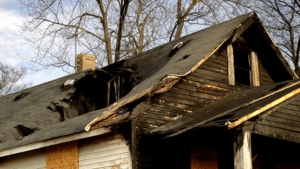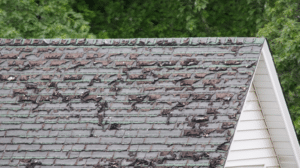
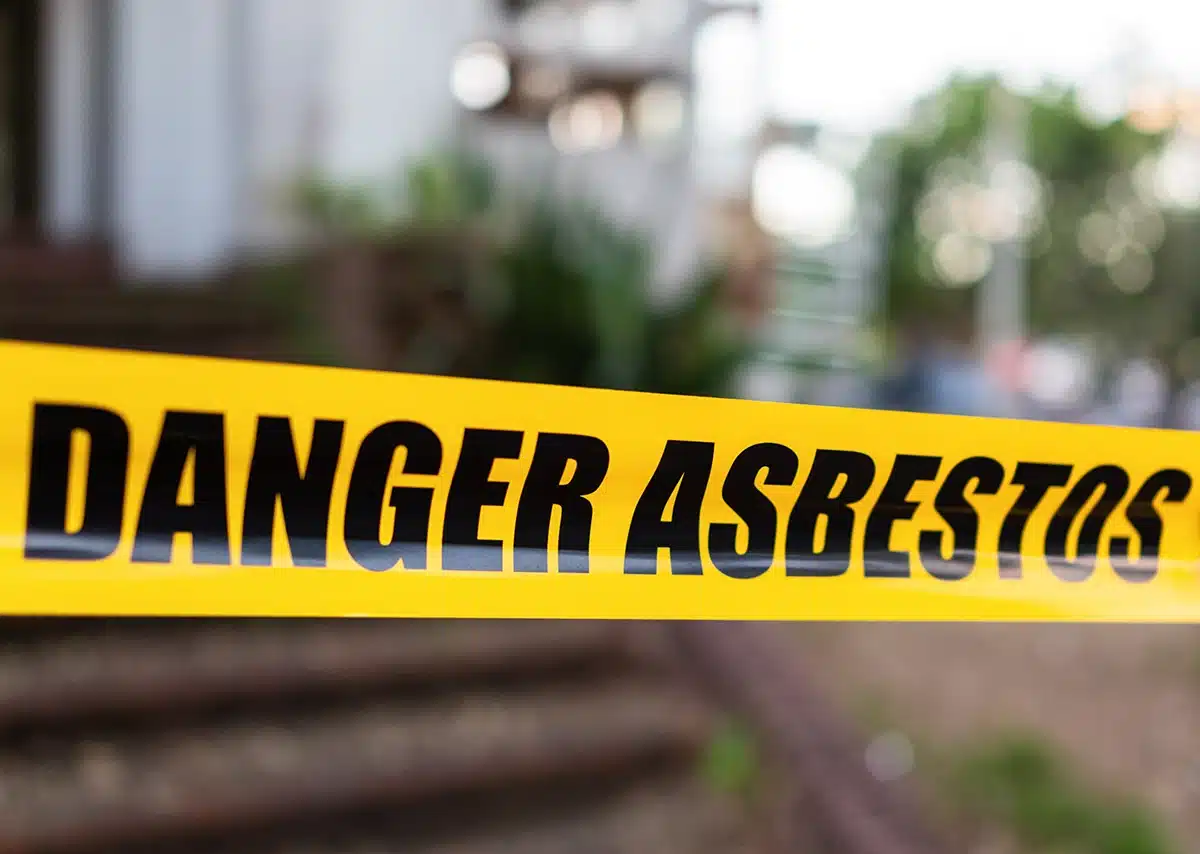
When work begins after a loss (water, wind, or fire) and someone says “that might be asbestos,” pause. Asbestos is common in many pre-1980 homes (floor tiles, mastic, pipe wrap, joint compound, ceiling textures). It’s manageable—but only when handled by licensed pros and documented correctly so your insurance claim stays on track. Source: U.S. EPA — Asbestos Do’s & Don’ts · U.S. CPSC — Asbestos in the Home
What Is Asbestos (and What Does It Look Like)?
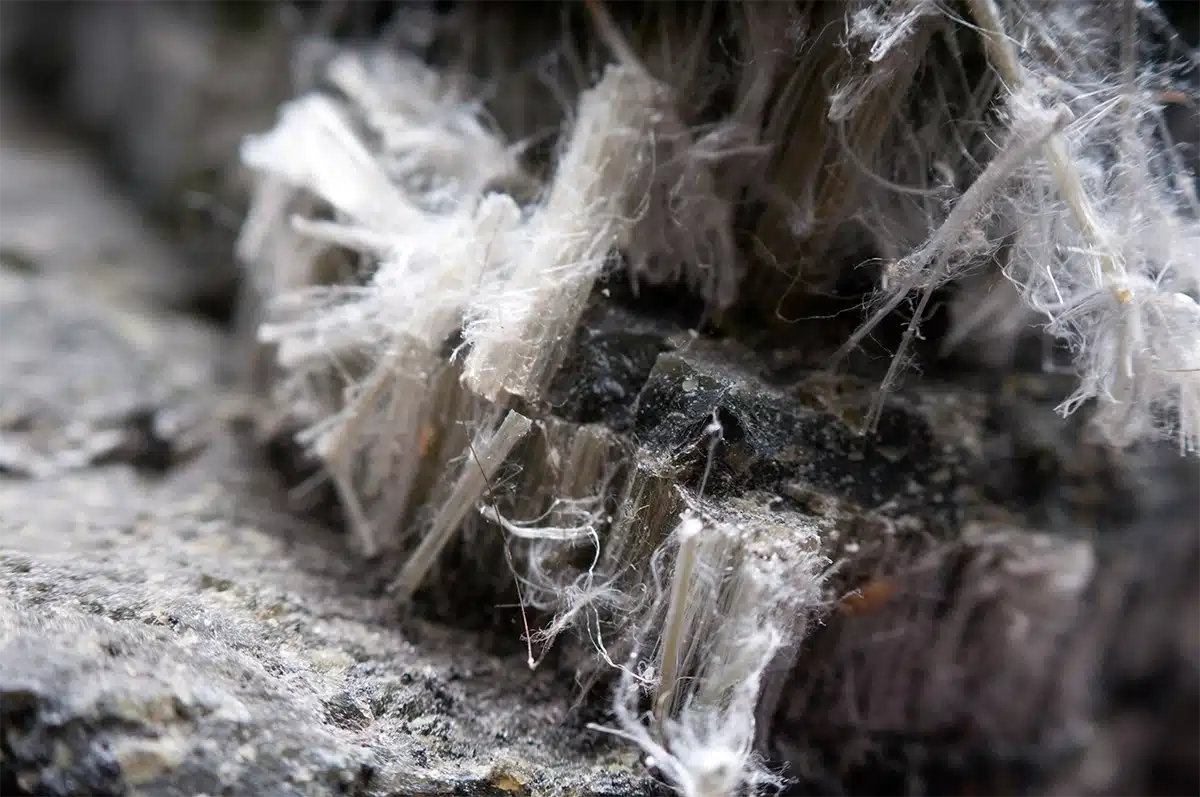
Asbestos is a group of naturally occurring minerals made of microscopic, needle-like fibers that resist heat and corrosion. It was widely used in pre-1980 homes in materials like 9×9 floor tiles and mastic, joint compound, textured ceilings, pipe wrap, insulation, and cement siding. Up close it can appear hair-like or fluffy (friable)—often white, gray, or tan—but it’s frequently bonded inside other materials, so you may not see it at all. Crucially, you can’t confirm asbestos by appearance; only a licensed inspector and lab test can. If you suspect it, don’t disturb the area—limit access and arrange licensed testing so repairs stay safe and code-compliant.
First Steps (Safety + Claim Basics)
- Stop disturbing the area. No sanding, scraping, or demolition. EPA guidance
- Limit access. Close doors, turn off HVAC in that zone, avoid sweeping/vacuuming. Intact ACM is usually not hazardous—risk rises when it’s damaged or disturbed. CPSC overview
- Bring in licensed testing. A qualified inspector takes samples for lab analysis (don’t DIY). CT DPH — Asbestos Program
- Start your claim diary. Dates, names, promises, and photos of the area (no extra disturbance).
- Notify your carrier that suspected ACM (asbestos-containing material) was found during covered-loss repairs and that testing is underway.
Where Insurance Usually Fits (Plain English)
- Often excluded by default: Many property policies exclude losses connected to “pollution,” including asbestos. Coverage hinges on cause and policy wording. NAIC — Environmental Insurance
- But may be covered when a covered peril disturbs it: If wind, water, or fire requires abatement to complete covered repairs, related costs may be included—especially when required by code and documented properly.
- Ordinance or Law coverage matters: This endorsement can help pay for code-required abatement triggered by a covered loss. Insurance Information Institute — Homeowners Basics · IRMI — Ordinance or Law Coverage
- Not usually covered: Discovery during non-loss renovations, long-term wear, or pre-existing hazards that weren’t disturbed by a covered event.
Bottom line: Coverage depends on the loss, your policy language (ACV/RCV and Ordinance or Law), and tight documentation tying abatement to the covered repairs.
What a Public Adjuster Does When Asbestos Is Found
Your Public Adjuster (PA) represents you—not the carrier. Here’s our playbook:
- Confirm the link to the loss. We verify how the peril (burst pipe, wind opening, fire) affected ACM and tie abatement to the exact repair sequence needed to restore your home.
- Coordinate the right experts. We help you obtain licensed inspection/testing, written abatement protocols, and post-abatement clearance plans, ensuring proposals include containment, negative air, PPE, disposal, air monitoring, and clearance testing. CT DPH — Licensed Contractors & Consultants
- Build a complete, code-compliant scope. We prepare a line-item estimate that mirrors real work: containment → removal → disposal → clearance → rebuild, plus code items and any temporary duct protection/cleaning if required.
- Handle the carrier communication. We submit reports, photos, estimates, and lab results, request re-inspections when demo reveals more ACM, and pursue justified supplements.
- Manage dollars and deadlines. We track ACV/RCV payments, recoverable depreciation, and Additional Living Expenses (ALE) if areas are uninhabitable during abatement—so you don’t miss holdback deadlines. NAIC — Additional Living Expenses (ALE)
- Close the loop. After clearance, we ensure rebuild items (insulation, drywall, finishes, matching) are included and paid correctly.
Quick Coverage Examples (Orientation—Not Guarantees)
| Scenario | What Often Happens | What a PA Pushes to Include (When Tied to Covered Loss) |
|---|---|---|
| Burst pipe saturates 9×9 tiles | Tiles test positive; removal required to dry/rebuild | Containment, removal, disposal, air monitoring, clearance, and floor rebuild |
| Wind tears roof; damaged ACM ceiling below | Ceiling demo/repair triggers ACM disturbance | Safe demo/containment, removal, replacement of affected insulation/drywall, repainting |
| Small kitchen fire; soot cleanup planned | Demo reveals ACM in mastic behind cabinets | Abatement protocol for mastic, clearance tests, cabinet reset, finished surfaces |
| Home remodel with no loss event | Discovery during elective work | Typically not covered (home improvement) |
Your policy and facts control—these are examples, not promises.
Homeowner Checklist (So You’re Ready)
- Documentation: Wide + close photos (without extra disturbance), inspection reports, lab results, abatement proposal, daily logs, clearance certificates.
- Scope: Containment specs, negative air, waste manifests, clearance criteria, rebuild items. For some older materials (e.g., certain floor tiles up to 1980), presume ACM unless testing proves otherwise. OSHA interpretation — PACM
- Receipts: Testing, abatement, temporary protection, ALE (lodging, meals if applicable). NAIC — ALE
- Communication: Claim diary with dates/names and upload confirmations.
Common Pitfalls (And the Better Play)
- Pitfall: Starting demolition before testing. Better: Test first; build the plan around results. EPA homeowner guidance
- Pitfall: Pricing only “removal,” not containment + clearance + rebuild. Better: Full sequence scope so you don’t get stuck mid-project.
- Pitfall: Ignoring code/Ordinance-or-Law language. Better: Cite code triggers and policy endorsements clearly. IRMI explainer
- Pitfall: Tossing materials before the adjuster sees them. Better: Over-document and retain samples per abatement guidance.
How Robinhood Adjusters Helps (CT-Focused & Homeowner-First)
- Licensed representation in Connecticut advocating solely for you.
- On-site documentation plus coordination with licensed asbestos inspectors and abatement firms. CT DPH — Licensed Contractors
- Complete, code-compliant scopes that match contractor reality (not shortcuts).
- Supplements & re-inspections handled professionally with clean evidence.
- Payment tracking (ACV/RCV, depreciation, ALE) and deadline management.
- Clear communication so you always know what’s next.
FAQs
Will I have to leave my home?
Possibly for specific areas or the whole home during containment. Your abatement plan and clearance criteria dictate this; ALE may help when tied to a covered loss. NAIC — ALE
Does insurance pay for testing?
Sometimes—especially when testing is necessary to complete covered repairs safely. We document the need and request reimbursement.
How long does abatement take?
From a day or two for small spots to a week+ for multi-room projects, plus rebuild time. We reflect realistic durations in the scope.
What if my carrier says it’s excluded?
Exclusions are common, but many abatement costs become payable when required to complete covered repairs or by code. We present the facts, request re-inspection if needed, and submit a justified supplement. NAIC context
Get a free consultation today.
We’ll review your loss, policy, and test results, then manage the plan—from testing and abatement through clearance and rebuild—so your home returns to safe, livable, and fully restored.